


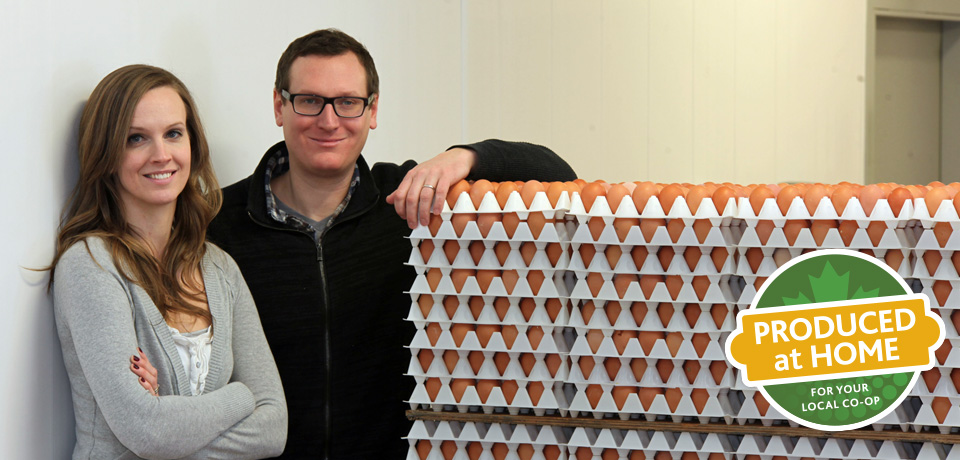
Shawn Harman wouldn’t be able to put all his eggs in one basket, even if he tried.
Between three production facilities, the Harman family manages 170,000 hens, which each lay 25 dozen eggs per year for a total of 51 million eggs.
“As the province has grown over the years, the company has grown to supply the increasing demand,” Harman said. “In the past, a lot of eggs in Saskatchewan had come from out of province. Our prerogative is to supply the domestic market with locally produced eggs.”
Harman Poultry Farms began with Harman’s father and grandfather in 1969 near Prince Albert, Sask, where they supplied eggs to local grocery stores and restaurants. Since then, the family operation has grown to having egg-laying facilities in Prince Albert, Humboldt, Sask., and Steinbach, Man., with two new free run productions being built in each Saskatchewan and Manitoba. Harman’s father and sister are involved in the business and his three children, the fourth generation, are helping to build the new facilities.
Eggs move from farm to store in about a week, stopping at a grading facility to be washed, weighed, sorted and inspected for defects such as dirt, stains, cracks or blood spots.
Co-op sources eggs from one grader in each Prairie province: Sparks Egg Farms in Alberta, Countryside Farms in Manitoba and Star Egg in Saskatchewan. All eggs in Co-op stores are local, including CO-OP® GOLD and CO-OP ¢ENTSIBLES® products, meaning Co-op shoppers have access to fresh eggs.
The Harman family purchased Star Egg in 1979 and now grades eggs from one million hens and 65 producers in Saskatchewan.
Egg-ceptional work
“It’s exciting watching a flock come into production and start to lay eggs,” Harman said. “Making sure all the variables are correct is a rewarding experience.”
These variables include clean water, clean air, lighting and nutrition. Co-op works with the Harmans to design and develop the appropriate nutritional rations for their hens.
“In our organization, we have made animal care a priority,” he explained. “You have to make sure the needs of the laying hens are met. A laying hen that is stressed out or not happy will not lay eggs.”
He said the industry has been shifting in response to consumer perceptions and demands. Although a new code of practice from the National Farm Animal Care Council will be released soon, Harman feels an enriched colony system is the right balance of animal welfare, environmental sustainability and food safety.
Production system aside, Harman said customers should be confident in the eggs they buy in store.
“Eggs in Saskatchewan and Canada are produced with very high standards, some of the highest standards in the world.”
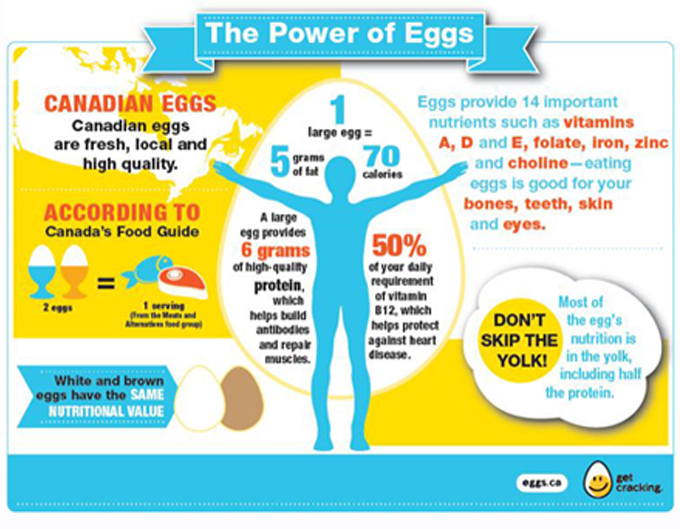
High standards for a product that Harman calls “nature’s perfect food.” Not only do eggs have an array of vitamins, nutrients and minerals, they contain five to six grams of protein and all nine essential amino acids your body can’t produce.
And there’s so many ways to eat eggs.
“I like hard-boiled eggs because you can boil them and have them ready to eat.”
So no matter how you like your eggs – fried, scrambled, poached or “nogged” – or foods with eggs – breakfast wraps, frittatas, burgers – it’s time you got cracking.
Did you know?
- Yolk colour is determined by the hens’ diets: pale yellow generally means grain fed versus a gold yellow for corn fed.
- While large eggs make up the majority of sales, egg size is usually determined by the age of the bird, but can also be affected by diet. Generally, the older the bird, the larger the eggs produced.
- Eggs have a long shelf life, lasting 45 days in a refrigerator from the time they’re graded.