


Platters serve multiple functions, whether you’re entertaining or home alone. This spread of food can serve as a snack, a first course to the meal or even act as the meal itself.
Explore the world with platters. While there are differences between meze (or mezze), charcuterie and antipasto, the common premise for all three variations is the importance of sharing and tasting quality food. Platters offer us the opportunity to eat at a slower pace and enjoy conversation and our surroundings.
Try our take on these platters, pairing ingredients for small bites that burst with flavour.
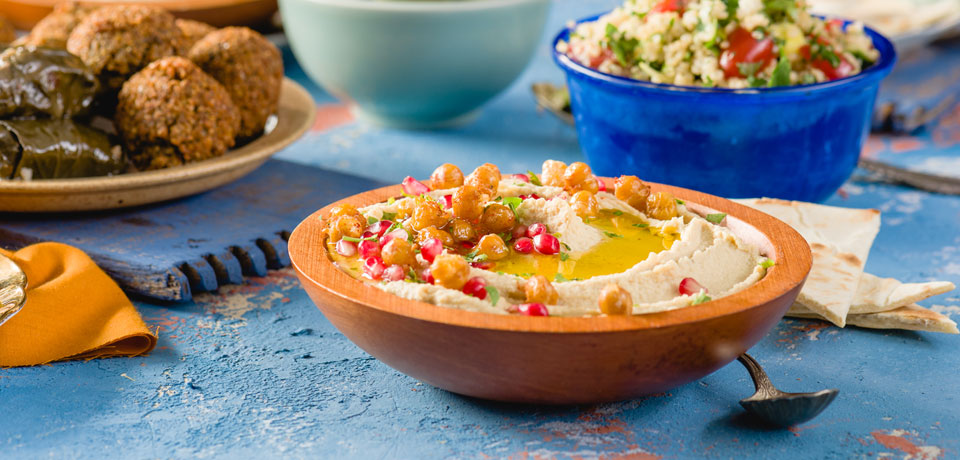
Meze
While charcuterie and antipasto have become household names, meze may be new to those outside foodie circles. Meze literally means appetizer in Turkish and may come from maza (to taste or relish) in Persian. It forms a part of cuisine in the Mediterranean and the Middle East.
Meze dishes vary by region, but include dips, meats, cheeses, fruits and vegetables. Breads such as pita also play a central role to the meal.
Suggestions:
- Pita
- Dips (e.g. hummus, baba ghanoush, tzatziki)
- Fruit and vegetables (e.g. artichokes, olives, figs, dates)
- Prepared dishes (e.g. tabbouleh, fattoush, falafel, stuffed grape leaves)
- Proteins (e.g. sausage, calamari, meatballs)
Charcuterie
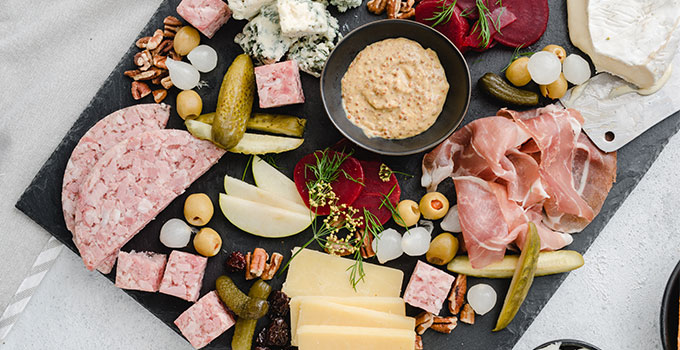
Traditionally, French charcuterie may be the most complicated of the three platters. Its focus is primarily on meat and displaying it using a variety of textures, flavours and techniques – from soft pâté to firm salami to complex galantine. Serve with condiments and other pickled products. Cheese is not traditionally part of a charcuterie board, but it pairs nicely on the side with other garnish.
Suggestions:
- Baguette or crackers
- Meats (e.g. prosciutto, salami, pâté, kubasa)
- Condiments (e.g. mustards, marmalades, compote, aioli)
- Cheese (e.g. brie, aged cheddar, gorgonzola)
Garnishes (e.g. artichokes, pickles, olives, dried cranberries)
Antipasto
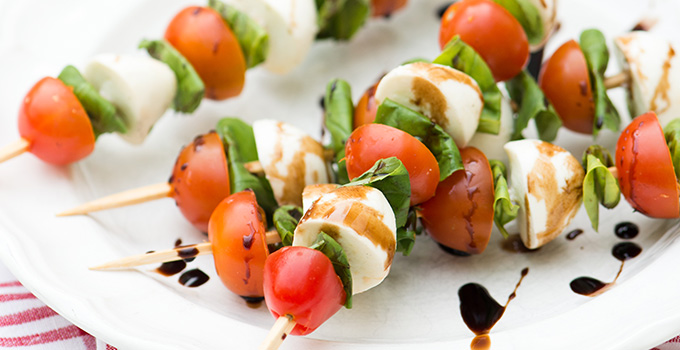
Antipasto is the first course of an Italian meal – meaning “before the meal” –and aims to stimulate your appetite. Italian food is known for being fresh and simple. Antipasto should show a range of flavours and colours, so incorporate grilled peppers and eggplant, marinated artichokes and tomatoes.
Suggestions
- Bread sticks or garlic crostini
- Cured meats (e.g. prosciutto, salami)
- Cheeses (e.g. gorgonzola, provolone)
- Caprese skewers
- Pickled vegetables (e.g. artichokes, peppers, olives)
All three platters allow you and your guests to experiment using different combinations of flavour.
So dive into meze, charcuterie and antipasto. Take a big bite and taste a world of flavour.