


There isn’t anything complicated in the preparation of Italian food. In general, it is judged by the quality of its ingredients – fresh, simple and straight-forward.
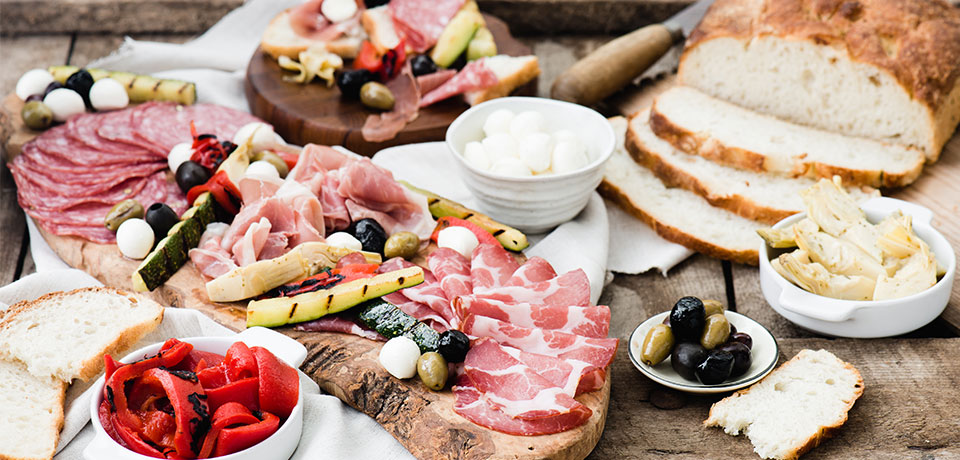
Assembled Antipasto
Antipasto signifies the start of the Italian meal. Serve a platter with your favourite items. Cured meats such as prosciutto, salami and capicola are presented rolled alongside fresh, roasted or pickled vegetables. Try black and green olives, marinated artichokes, grilled zucchini and roasted red peppers. You can also added cheeses like bocconcini.
Pasta primo
For your first course, try Rigatoni al Forno with Bolognese Sauce.
There are two processes that can be used to make pasta. In the first, pasta dough is rolled flat and then cut. In the second, dough is placed in an extruder and forced mechanically through a die – a flat disc with openings which determine the pasta’s shape. Most pasta sold in food stores in made using an extruder. Try to use pasta made with a bronze die, as opposed to one made from Teflon, which is identifiable by having a lighter yellow colour and rough texture – this allows sauce to cling better to the noodle.
There’s a saying that pasta waits for no one. If your pasta is done before the sauce, never rinse it with cold water to prevent it from becoming overcooked. Not only will this wash away vital starches that help thicken the sauce, it can wash away flavour. Instead, leave the pasta in the colander or spread out over a baking sheet to cool.
Scallopini secondo
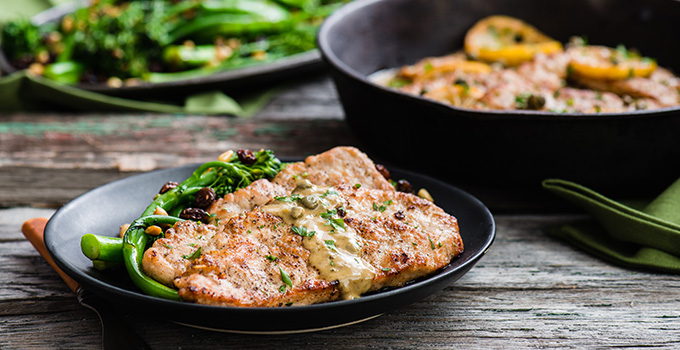
The main course traditionally uses a thin meat. While it was usually veal, pork and chicken are often made as a substitute. Make pork picatta by slicing three to four ounce pieces of pork loin and pounding flat. Bread the pork using an egg wash and bread crumbs; season with salt, pepper and parmesan and then fry. CO-OP® GOLD Lemon Caper Aioli adds additional flavour to the dish.
Rapini, also known as broccoli raab, is great as the contorno (side dish) to accompany the picatta. Blanch the rapini for three to four minutes in boiling salted water. In a separate pan, saute garlic, raisins and pine nuts in olive oil, eventually adding three to four tablespoons of balsamic vinegar. Then gently toss in the rapini.
The whole point of an Italian meal is the simplicity in preparation and presentation, which allow quality ingredients to shine. Don’t wait for a special occasion. Take a lesson from Italians and enjoy great food at any time with your family and friends.