


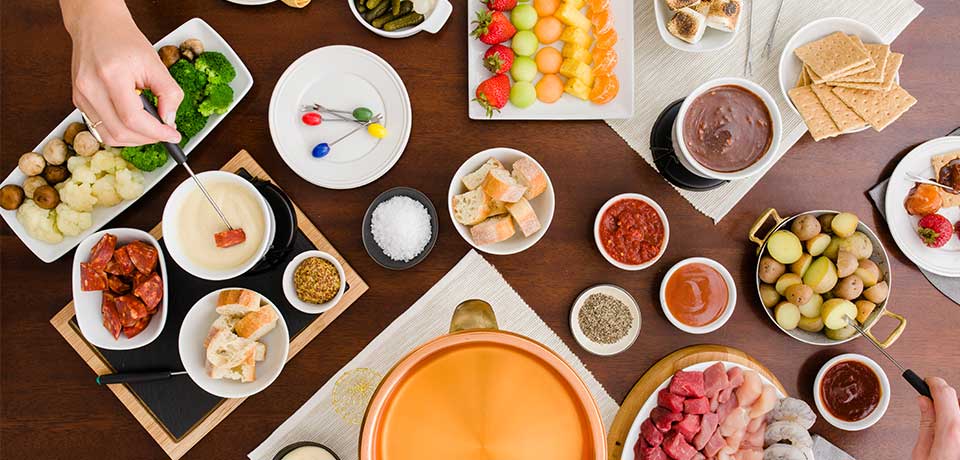
Fondue is back in a big way.
From its heyday in the 1960s and 1970s, fondue has returned to the limelight with innovative new combinations that step beyond tradition.
“As our palates have become more sophisticated, we experiment,” said Jasmin Kobajica, Culinary Innovation Manager at Federated Co-operatives Limited. “That’s one thing that’s great about North America, we take traditions and we make them our own.”
Fondue – which comes from the French word fondre, to melt – can be used for a meal or as an appetizer, providing entertainment and a communal experience at any gathering.
Tradition is still tops
Traditional Swiss fondue combines white wine, classic cheeses – like gruyere or emmentaler – a thickening agent and a dash of kirsch, which is a fruit brandy. The melted cheese is then used to dip crusty chunks of bread.
The acidic nature in white wine helps prevent the cheese proteins from clumping together. Non-alcoholic variations tend to use a liquid – like milk, cream, broth or apple cider – combined with an acid such as lemon juice or vinegar.
Kobajica suggests looking at some other flavour combinations as well.
“We’re discovering things like gouda is a better melting cheese,” Kobajica said. “Beer and wholegrain mustard in the cheese – that’s an awesome flavour.”
Cranberries can be added to cheese as can any combination of spices or rubs – try adding Moroccan or Indonesian flavours. For items like peppers or chorizo sausage, Kobajica recommends bringing the cheese to the item – instead of dipping – to prevent the flavours and colours from being infused into the cheese.
Them’s the breaks
Cheese and chocolate fondues must remain at low temperatures and be added in small quantities to the hot liquid to prevent breaking or separation.
“What I’ve done, I actually toss cornstarch in with the shredded cheese and then add to the hot liquid,” Kobajica said, noting liquid shouldn’t be too hot.
As an added fail-safe, Kobajica recommends making the fondue in a double boiler and then adding to a fondue pot to keep warm and for dipping.
For chocolate, he recommends melting Swiss milk chocolate, or using a fondue-specific chocolate product – as opposed to other dark chocolates, which need to be mixed with cream.
If separation does occur, you’ll have to start over. However, you can still add the broken cheese or chocolate to the fixed fondue.
Caution while cooking
If you don’t want to chance cheese or chocolate, try making a fondue from oil – sometimes referred to as fondue bourguignonne – or broth. Cooking meat and vegetables in broth has its origins in the Asian hotpot.
Assemble a plate of proteins and vegetables around your fondue pot. Then have different sauces ready to dip your cooked food into.
- Proteins: chicken, pork, beef, shrimp
- Vegetables: Broccoli, cauliflower, potatoes, mushrooms
- Sauces: Aioli, barbecue sauce, hot sauce, sweet and sour
When working with raw products, ensure your protein is fully cooked before eating. Proteins should be poached and vegetables blanched for use in cheese fondues.
Make it memorable
Get innovative to make fondues for any season. Summer fruits like strawberries and melons go great in chocolate, as does a roasted marshmallow – to be sandwiched between two graham crackers for a fondue s’more.
Enjoy the fall and football season and use cheese fondue for nachos and oil fondue for chicken tenders. Add liquers – coffee, irish cream or orange for example – to your chocolate fondue.
“Fondue is memorable and a lot of people haven’t experienced it,” Kobajica said. “Your guest is doing the cooking; they’re preparing their own meals so it’s more communal. It’s a very engaging experience.”
So pull out your fondue set if you have one. Today’s induction burners can also keep fondues at consistent low temperatures, otherwise rummage through a relative’s basement. It’s time to turn fondue into some fun do.