


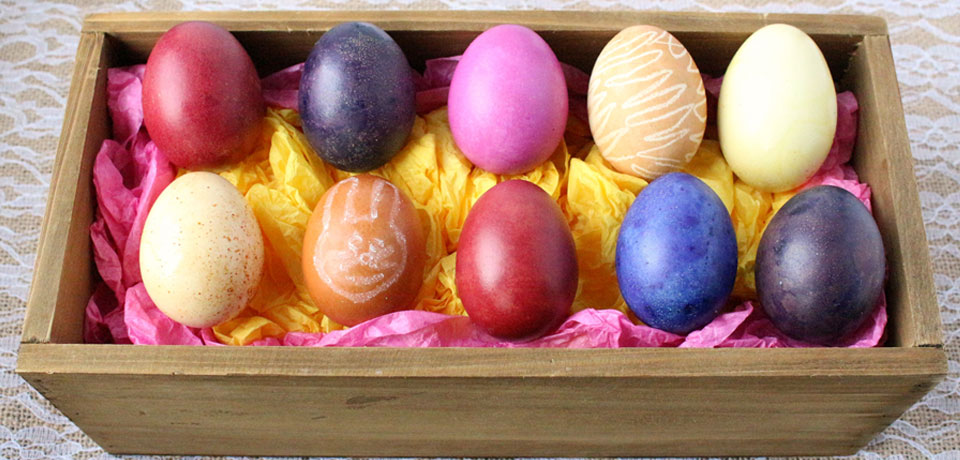
With Easter quickly approaching, it’s time to start thinking about decorating those Easter eggs. The stores are filled with egg decorating kits, but try some eggs-periments with the kids this year by making natural dyes with ingredients you have around home.
Whether using raw eggs or hard-boiled – see below for my tips on cooking – the time you leave the eggs in the natural dyes is up to you. Of course, the longer you leave them in the dye, the darker your colours will be. Your colour results will be different depending if you use white or brown eggs.
Frozen Blueberries
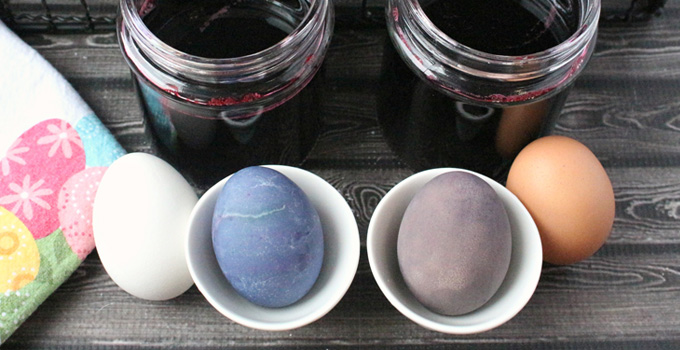
In a medium saucepan, boil two cups of water with two cups of frozen blueberries. Bring to a boil then remove from heat, strain the water and let cool. Add two tablespoons of white vinegar to the dye before placing eggs in to dye them.
Grape Juice
In a medium bowl, mix two cups of grape juice with two tablespoons of white vinegar.
Beets
Place a jar of beets (including the juice) in a large saucepan and add one cup of water. Bring to a boil on the stovetop, strain liquid and let cool. Add two tablespoons of vinegar to the dye before placing your eggs in it.
Tea
Add two tea bags to two cups of boiling water. Let this cool before adding two tablespoons of white vinegar and eggs to dye
Cumin
For light green/yellow eggs, add ¼ cup ground cumin to one cup boiling water. Once cooled, add two tablespoons of white vinegar to the mixture before adding the eggs. You’ll want to leave the egg in the mixture for a long time (maybe even overnight in the fridge).
Time to eat
Once you’ve finished decorating and proudly displaying your eggs, you may be able to eat them if:
- the dye you’ve used is safe to eat;
- the eggs weren’t left out of the fridge for longer than two hours (yes, even decorated eggs should be placed back in the fridge if you plan on eating them); and
- the eggs have been hard-boiled within the last week (you’ll want to throw them out if they were boiled more than seven days ago).
Coloured Easter eggs make the perfect centrepiece, particularly if you incorporate them into braided Easter bread. Just check whether your recipe calls for dyed eggs that are hard-boiled or raw before being baked into the bread.
Tips for hard-boiled eggs
My preferred method is to place the eggs in a large pot, cover them with water, bring that pot to a rolling boil on the stove then turn off the heat, cover and leave on the stove for 10 minutes before draining the water. Let the eggs cool, then store in a sealable food storage container in the fridge until you’re ready to start decorating.
Cheryl Kirkness is a stay-at-home mom and owner of momsandmunchkins.ca, a blog filled with activity and party planning inspiration for all ages.