



Anaphylaxis is an acute, potentially life-threatening allergic response to an allergen. It requires immediate emergency care.
Jeff Coldwell, Pharmacy Manager at Beausejour Co-op in Manitoba, talked to us about anaphylaxis and how your Co-op pharmacist can help you avoid its triggers.
What are anaphylaxis symptoms?
"Anaphylaxis symptoms usually have a rapid onset, appearing five to 30 minutes after exposure to the cause of the allergic reaction," explained Coldwell, noting in rare instances reactions can occur after 30 minutes.
Common symptoms of anaphylaxis include:
- shortness of breath
- hives (often itchy)
- wheezing
- lightheadedness
- swelling of the face, lips or tongue
- trouble swallowing
- flushed or pale skin
- nausea and diarrhea
Anaphylaxis is caused by ingestion or exposure to allergens. Common allergens include nuts, eggs and shellfish; insect stings and bites from bees, wasps, hornets and ants; medicines, and latex.
How can I reduce the risk of a severe allergic reaction?
If a person has a known allergy, the best way to prevent future reactions is to avoid the allergen. People with food allergies should always read labels on products before consuming food or beverages. People with insect bite allergies can wear long sleeves and insect repellant to lessen the chance of a sting or bite.
For medicine allergies, inform your health care professional of your allergy to ensure that this medication is not given to you, as there are often alternative medications that can be prescribed.
"If you've had a severe reaction in the past from exposure to an allergen, all coworkers, classmates, friends, and family should be informed of this," said Coldwell.
A medical alert bracelet can be worn to inform other people of your allergy which can be useful in the case of an emergency.
How is anaphylaxis treated?
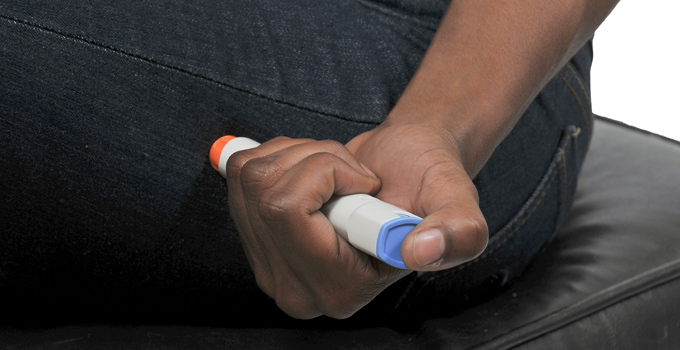
An anaphylactic reaction is treated with an epinephrine auto-injector (EpiPen®) as soon as possible. People who have had an allergic reaction in the past should carry an EpiPen at all times.
"Epinephrine helps relax the muscles in your airway helping you breathe, helps reverse the decrease in blood pressure, and relaxes the muscles in the stomach, intestines and bladder," said Coldwell.
Using an EpiPen or other epinephrine auto-injector as quickly as possible can improve the outcomes of severe allergic reactions significantly and save lives.
After the epinephrine auto-injector is administered, 911 should be called. Other medications and treatment will be given at the hospital which may include antihistamines and steroids.
What is the role of my pharmacist in preventing anaphylaxis?
Pharmacists should ensure that patients and their family members are properly educated about the severity of anaphylaxis and how to identify signs of an allergic reaction.
"All patients who have had an allergic reaction should be strongly encouraged to carry at least one EpiPen with them at all times and know how to use it properly," said Coldwell.
If you have questions about anaphylaxis or how to use your EpiPen, get in touch with your Co-op Pharmacist today.