


Potassium: Are you Getting Enough?
Note: If you have kidney failure, discuss the role of potassium with your health care provider.
According to Health Canada, heart disease affects about one in 12 (or 2.4 million) adults and is the second leading cause of death in Canadians. Hypertension (high blood pressure) is one of the leading risk factors for heart disease. While some risk factors, such as family history, are out of our control, we can reduce other risk factors with improved nutrition.
When it comes to hypertension and heart disease, we hear a lot about sodium and saturated fat. But a very important nutrient often gets overlooked. Potassium is chronically under consumed, yet readily available. In this post we’ll explore what potassium is, its role in heart health and how to boost your intake.
What is Potassium?
Potassium is an essential mineral that’s naturally present in food and also available as a supplement. ‘Essential’ means that in order to meet the body’s needs we have to consume it in the diet. Adult males require 3400mg per day and females require 2600mg per day, but the majority of Canadians are not consuming enough.
Food Sources of Potassium
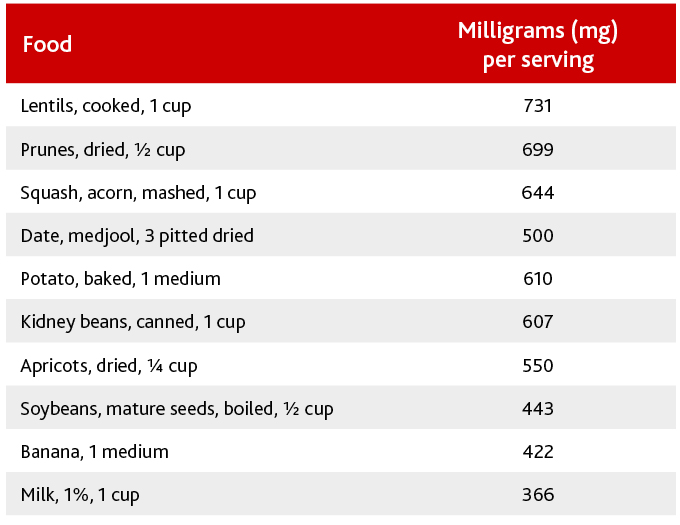
Potassium is found in a variety of foods but primarily fruit, vegetables, pulses and low-fat dairy. This chart gives you an idea of potassium-rich food sources.
Potassium’s Role in Heart Health
Potassium and sodium together play a big role in regulating blood pressure, helping the kidneys to work properly and maintaining fluid balance. While we don’t fully understand the mechanism, when consumption of potassium increases, blood pressure drops. This benefit comes from food sources of potassium, not supplements. And when you get your potassium from food, you also tend to consume less sodium.
Be aware that potassium supplements can negatively interact with medications or dangerously elevate potassium levels in the blood.
Because hypertension is a risk factor for stroke and heart disease, efforts to correct it are important for long-term health. Evidence shows that potassium intake is essential to healthy blood pressure levels, regardless of sodium consumption.
How to Add Potassium to your Diet
Here are three simple ways to help boost your potassium intake:
- Eat 1 cup of fruit or vegetables three times every day. Don’t worry too much about which ones contain more potassium – simply choose your favourites! My favourite suggestions:
- Load up your favourite soup with carrots, celery, tomatoes and kale
- Enjoy a smoothie with yogurt, fruit and spinach
- Snack on apple slices with peanut butter
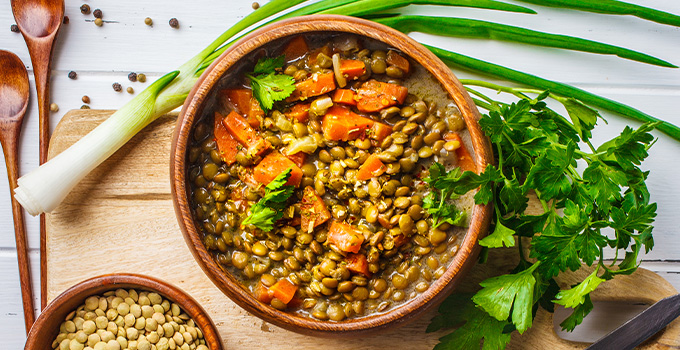
- Explore cooking with pulses like chickpeas, lentils and beans. If you’re new to pulses, start by adding them in once a week:
- Snack on raw vegetables with hummus
- Add lentils to meat sauce
- Make a minestrone soup with kidney beans
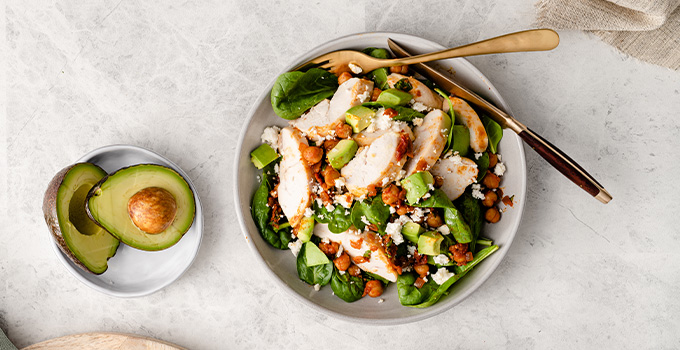
- Add chickpeas to a chicken pasta salad or try Baked Chicken With Warm Chickpea Salad
- Swap out one refined grain product (like white bread, pasta or rice) with a whole grain like brown rice, quinoa, oatmeal or whole grain pasta. Try this delicious Apple Raisin Walnut Oatmeal recipe!
Brooke Bulloch is a Registered Dietitian and CEO of Food to Fit Nutrition Inc. She has worked with Huffington Post, Best Health magazine, Canadian Living, Chatelaine, The Globe and Mail and continues as a regular guest on Saskatoon’s Global News Morning.