


Butter is back. Once seen as a detriment to diets for being too high in fat and a risk to heart health, more research and understanding into saturated and trans fats has led to growing acceptance of the flavourful, golden bars.
Don Bayrack has seen the churning of the tides and increased consolidation in the industry since he started Foothills Creamery in Calgary in 1969.
“When we started, there were 80 plants in Alberta making butter,” said Bayrack, president of the Alberta-based business. “For the last 20 years, it’s just been (a competitor) and us. We were fortunate enough to hang in there.”
- MORE: Become a pie crust pro
He’s noticed the change in attitude towards butter. The average Canadian used 18 per cent more butter in 2016 than a decade earlier. Bayrack also noted people are seeking flavoured butters too.
Foothills Creamery produces CO-OP GOLD Premium Butters in three variations: garlic, sea salt and chef’s butter – which has a marginally higher fat content akin to traditional European butters.
“As far as good butter from bad butter, it’s just whatever you prefer,” Bayrack said.
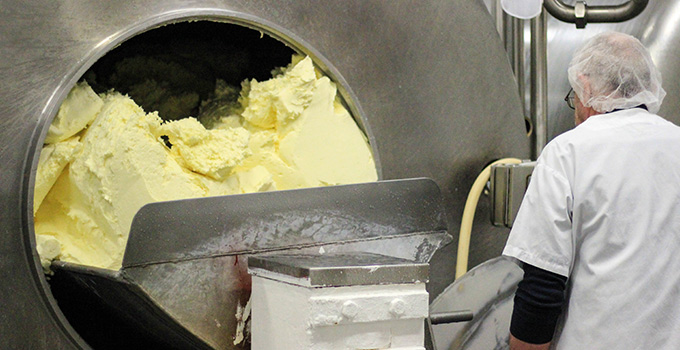
It takes 45 minutes for the fat to separate from the buttermilk in the large churns at Foothills Creamery in Calgary, Alta.
Behind the butter
Bayrack has always been in the butter business. Originally from Olds, Alta., Bayrack started at a creamery as soon as he left school. When the company he was working for decided to exit the market, Bayrack and two partners purchased the equipment and set up shop in southeast Calgary.
He’s been involved in every stage of the business, from production to sales to deliveries. He’s seen equipment change as well as the way milk was shipped – originally in cream cans that occasionally had flies fly out when you opened the lid.
“One thing that hasn’t changed is a pound of butter is still a pound of butter,” he said. “Regulations are still the same and it’s wrapped the same way.”
Foothills Creamery sources their cream fresh from dairies in Alberta and British Columbia. They use a conventional barrel churn to produce a smooth, old-fashioned butter. Using this method, cream is piped into the churn where it takes 45 minutes for the fat to separate from the buttermilk. The butter is then washed and tested for moisture; salt is added and then the butter is moved to be packaged.
Bayrack said they will produce between seven and eight million pounds of butter this year.
While the company expanded into ice cream in 1986, butter is still its main product – its bread and butter so to speak. This, as it happens, is also Bayrack’s favourite way to enjoy it.
“It’s hard to beat a fresh piece of white bread with butter on it,” he said.
There’s nothing butter.