


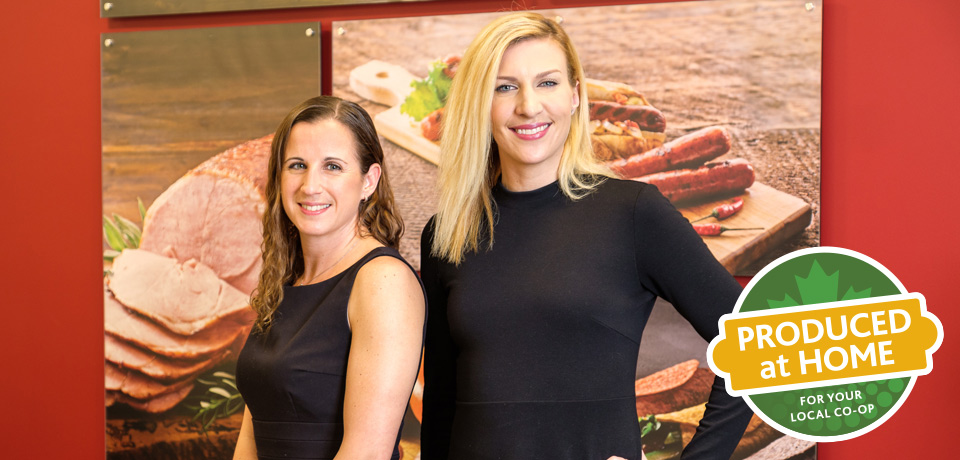
When producing a high quality ham, it helps to have a history.
Since their beginnings more than 65 years ago, Grimm's Fine Foods has been producing delicious deli meats using German traditions.
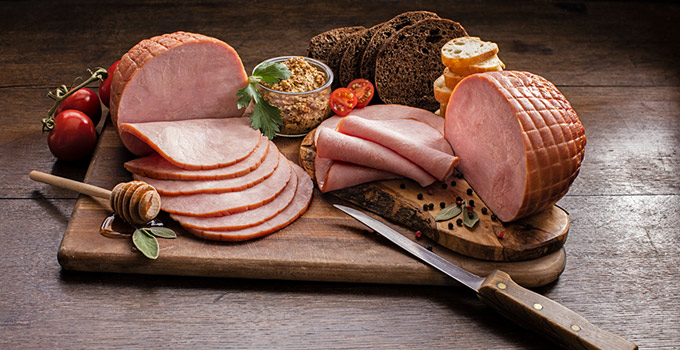
In 1994, Grimm's and Co-op began working together to help distribute their premium deli hams to Western Canadians. Today, you can find Grimm's hams in classic flavours Black Forest, Honey Ham and Old-Fashioned at your Co-op deli counter.
"It's the family values, trust and authenticity that go along with our brand that connects us to Co-op," said Kelli Kaake, Grimm's Brand Manager.
A local focus with a national outlook
Grimm's Fine Foods was founded in 1951 by brothers Henry and Jacob Grimm. From their butcher shop, they served local meat products to Vancouver's Eastern European community.
Their business grew, and they opened a production facility in Richmond, B.C., in 1975, which allowed them to distribute their deli products to businesses throughout Canada. By 2012, they had moved to a facility in Langley, B.C., where they are located today.
Even with recent growth and expansion, Grimm's still relies on traditional methods to craft high-quality products.
A deceptively simple process
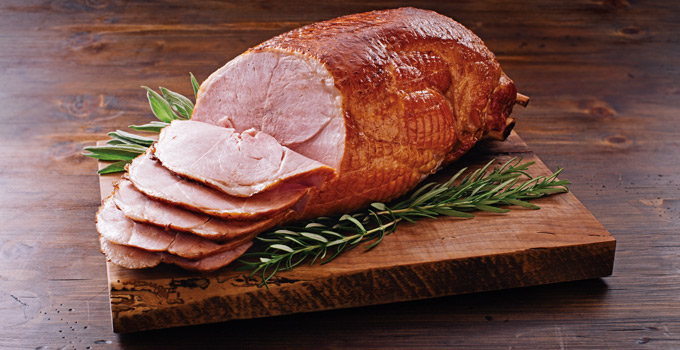
The Grimm's technique has been perfected over decades. Put simply, it goes like this: two pieces of leg meat are trimmed, brined, hand-stuffed into a net and then naturally smoked over hardwood chips. When the meat is ready, the net is removed, and the ham is packaged and sent to your local deli.
While it may sound easy, Courtenay Lewis, Director of Marketing at Grimm’s Fine Foods, explained that even though modern technology has fine-tuned many aspects, the manufacturing process still requires a certain level of artistry and passion that their team takes very seriously. Carving the meat, monitoring the smokehouses and inspecting the hams are done by people, not machines.
"A lot of the preparation that goes into making our hams is still done the way they would have been many, many years ago. We like to hold these traditions close; it’s part of who we are," said Lewis.
A high-quality ham
Making a Grimm's quality product requires the best ingredients. Grimm's hams are made with Verified Canadian Pork, a program that provides an assurance of food safety, animal care and traceability within the industry. They use real Canadian honey in their products, as well.
Kaake hopes the Grimm's logo inspires trust when customers spot it at their deli counter.
That trust comes from a tradition of making consistent products that their team would be proud to serve at their own family tables. Lewis thinks it's what sets them apart.
"When you try one of our Grimm's hams, you know that there is care and love and attention that went into making them for you."