


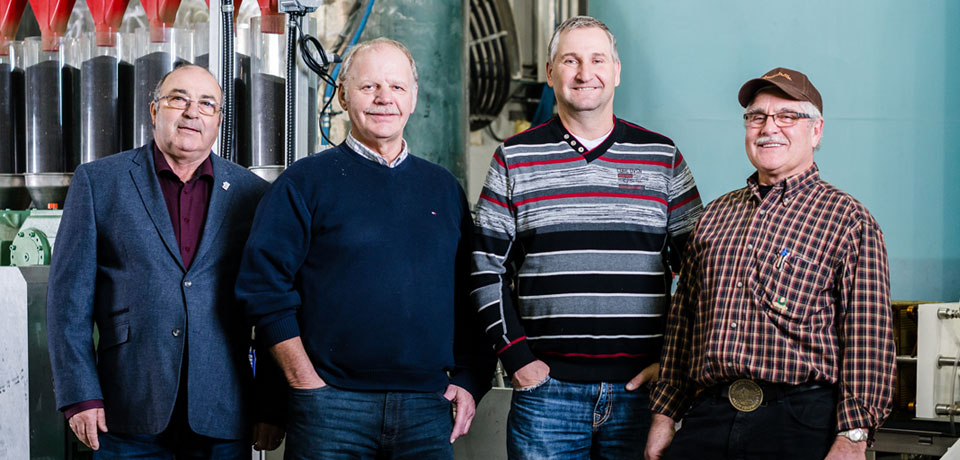
Don Fuhrman remembers exactly when his father planted his first canola crop in 1974.
“It was the year I got married,” said the third-generation farmer. “It was a very wet spring....We never turned a wheel until June 1. We seeded the last field on June 14, the day before (the wedding).”
Ever since, Fuhrman has grown canola crops in west-central Saskatchewan. He would deliver his harvest to commercial elevators, like many other producers, but was always left frustrated with the marketing system.
In 2009, he became one of the original 13 farmers that worked together to sell their grain. This group would become a majority shareholder in Virtex Farm Foods, a sister company aimed to produce and sell quality, value-added food products. Virtex purchased a 45,000-square-foot food processing facility with canola-crushing equipment near Saskatoon, Sask., in 2013.
“We saw a golden opportunity for farmers,” Furhman said. “Here’s a situation where we can go right from our field, into our plant and straight onto the store shelf. It’s like a dream come true for farmers.”

Canola was developed in the 1970s by researchers from Agriculture and Agri-Food Canada and the University of Manitoba and is considered the only “made in Canada” crop in the world.
A healthy olive oil alternative
Canola – the name combines Canada and ola, or oil – is an oilseed grown largely on the Canadian Prairies.
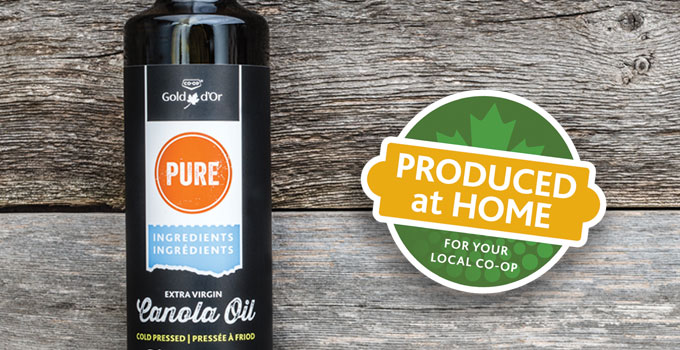
Virtex produces the new CO-OP GOLD PURE® Cold-Pressed Canola Oil, with non-GMO canola selected from 120 farms within a 200-kilometre radius of the plant.
However, this isn’t your average canola oil. While normally having a light colour and neutral flavour, the extra virgin canola oil is a rich, golden colour with a nutty, buttery flavour. Rick Pender, President and CEO of Virtex, explains this can be attributed to two things: being particular about the canola used and their cold-press process.
“Canola can have different attributes every year; there are no two plants that are the same. It’s no different than olives or grapes.”
Chlorophyll levels and oil content are only two components they look for, Pender said. He added they cold press by European standards, where the oil can never exceed 50°C, and don’t bleach, deodorize or use solvents.
“The less processing and heat you apply to the product, the more nutrition that stays in the oil.”
Canola oil is known for being low in saturated and trans fats, high in good fats (omega-3, omega-6 and monounsaturated fatty acids), free of cholesterol and a good source of vitamin E.
The extra virgin canola oil is versatile and can be used in baking, frying or dressing, a perfect alternative to extra virgin olive oil – but with a new, exciting flavour.
Educating and connecting
Pender said the farmers involved are learning more about consumers and the retail process. But for farmers like Bryan Leuschen, it’s also important to be open with consumers.
“Connecting with consumers is the most important thing we can do,” said Leuschen, who has a small family farm outside Cudworth, Sask. “I think it’s important for consumers to see that their food is strictly grown….More and more consumers can see what farmers are doing.”
Like Fuhrman, Leuschen is excited about the developments with Virtex. Now when he buys his bulk fuel and oil for his equipment at Vonda Co-op, he also sees the Virtex-produced cooking oil in the grocery store.
“It gives us the option to make the farm viable. I’m doing it for the next generation.”
The youngest son of Leuschen’s four children is working his way into the mixed grain and livestock operation. Despite the hard work and long hours– in addition to a career he retired from in Saskatoon – Leuschen continues to enjoy the land and farming, even after more than 26 years in the business.
“It’s just a passion of mine,” he said. “I don’t know if I’ll move off the farm or if they’ll carry me off.”
CO-OP GOLD PURE® Extra Virgin Canola Oil is now available at participating food stores in Western Canada.