


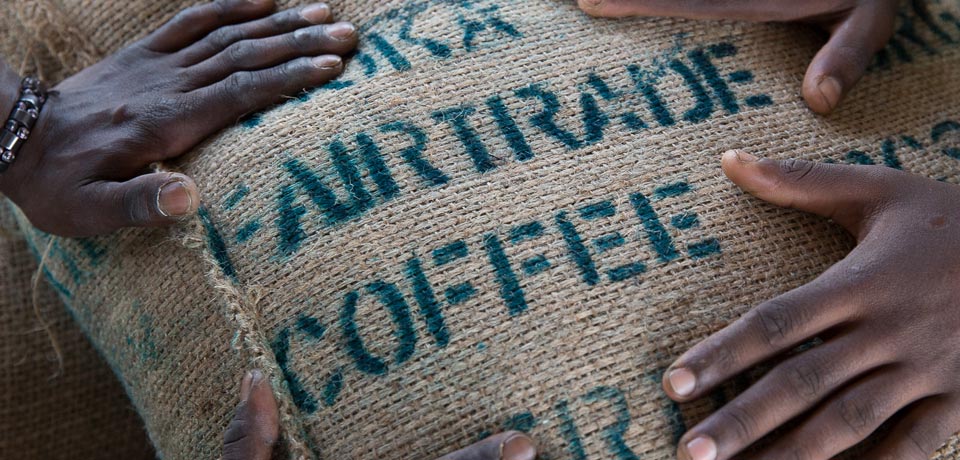
Coffee production is big business. Roughly 125 million people around the globe depend on the crop for their livelihood — and we’re not talking about consumers who need their daily dose of caffeine to kickstart their morning.
Yet it’s also a labour intensive crop that rarely offers fair compensation to its producers, and its dramatic price volatility on the world market has historically left many farmers vulnerable.
With little access to credit to invest in their businesses, combined with unpredictable climate conditions, some coffee famers can’t see a future in their crops and are forced to leave their farms to find other work.
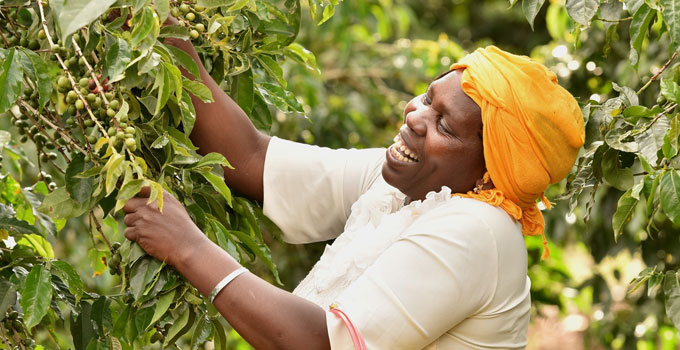
Fairtrade’s Growing Women in Coffee project encourages the transfer of coffee bush ownership to women coffee farmers in Kenya. Harvesting coffee beans, Elizabeth Chepkwony is one of 300 women at the Kabngetuny Cooperative who has benefitted from the program. (Source: Fairtrade Canada)
Building brighter futures
“I think Canadians care about social justice, they care about climate change, and they care about equality. Fairtrade is one answer to those concerns,” said Sonia Noreau, Public Relations Specialist with Fairtrade Canada. “It’s a way to make sure that in your day-to-day life — in your purchases — you are aligned with your values.”
The most important facet of the Fairtrade model is its impact on the ground, said Noreau. That positive impact largely stems from Fairtrade Standards such as Fairtrade Minimum Prices, and Fairtrade Premiums, which vary by region and product.
“The Fairtrade Minimum Price is there as a safety net to ensure a producer will never earn less than a specific amount for their crop,” she said. “When the market price goes up beyond the minimum price, the producer will receive the market price — whatever is higher.”
The Fairtrade Premium is an additional sum of money paid on top of the Fairtrade Minimum, and typically ranges between 10 and 15 per cent of the producer’s overall sales of Fairtrade products.
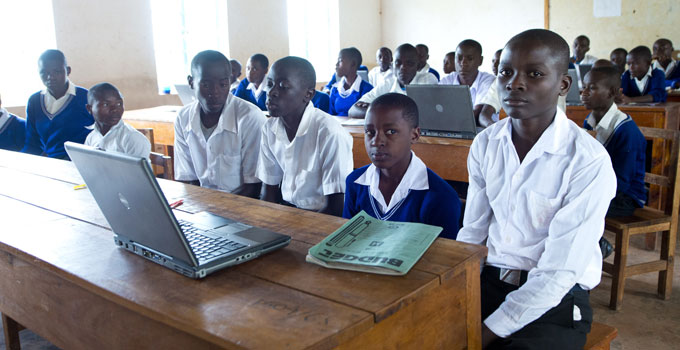
Students at Katoma Secondary School in Bukoba, Tanzania, have benefitted from donations from the Kagera Co-operative Union, one of the oldest and largest fairtrade coffee co-operatives in Africa. (Source: Fairtrade Canada)
Co-op supporting co-ops
“Fairtrade producers are organized in a democratic system,” said Noreau. “A huge majority are in co-operatives. Every worker is a member and they vote democratically: everyone has a vote and they decide how they’re going to use the Fairtrade Premium.”
As the largest Fairtrade coffee producer in Ethiopia, the Oromia Coffee Farmers Cooperative Union (OCFCU) consists of 217 cooperatives, of which 41 are Fairtrade certified. Some of that Fairtrade coffee ends up on Co-op Food Store shelves, and every purchase benefits not only the producers, but their entire community.
The OCFCU co-operatives have used their Fairtrade Premiums to build 15 schools and 42 classrooms. They’ve also invested in coffee storage facilities and machines to wash their beans more efficiently. The OCFCU has built four fully-equipped health clinics and covers their operating costs. They’ve established 56 clean water supply stations in coffee growing communities, and they’re teaching young women how to set up their own micro-enterprises.

New CO-OP GOLD PURE® chocolate is made with organic and fair-trade ingredients. Learn more
Commitment to fair trade
“Federated Co-operatives Limited has been very committed to fair trade,” said Noreau, noting the awards the organization recently earned: Retailer of the Year, and Excellence in Merchandising, which were presented at the 2015 Canadian Fairtrade Awards in Toronto last September.
Fairtrade isn’t simply about fair compensation. It also focuses on strong environmental standards, encourages sustainable agriculture and ensures ethical labour standards are followed.
“At the core of Fairtrade you have social justice,” said Noreau, “but it’s also improvement and empowerment of producers.”
It's working together to create something better.